What Is An Example Of A Case Study?
7 min read
●
Updated 30 October 2025
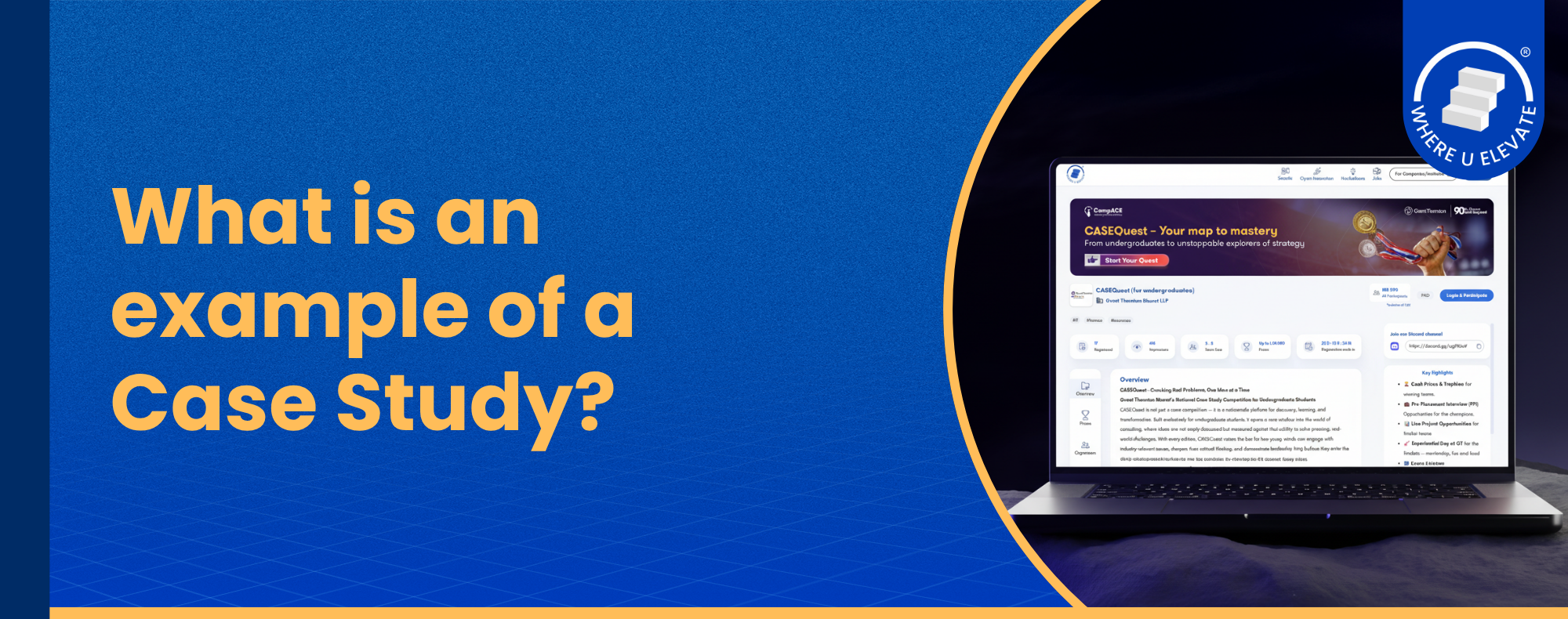
Learn what a case study is with real examples. Explore case competitions and how Where U Elevate enhances your problem-solving journey. Select 78 more words to run Humanizer.
In the world of business, consulting, and management education, the term Case Study is more than just a buzzword — it’s a cornerstone of learning and decision-making. Whether in a classroom discussion, a consulting engagement, or a national Case Competition, case studies serve as powerful tools that transform theoretical knowledge into practical insight. But what exactly is a Case Study, and what does a real example look like? Let’s break it down and explore how students, professionals, and platforms like Where U Elevate are redefining how case studies are used and experienced today.
Understanding What A Case Study Is
At its core, a Case Study is an in-depth analysis of a real or hypothetical situation faced by an organization, industry, or community. It’s designed to help learners or decision-makers understand complex business problems, analyze multiple perspectives, and propose actionable solutions. Unlike standard textbook questions, a case study doesn’t have a single right answer. Instead, it challenges you to think critically, use data, and make strategic choices — just as leaders do in real life.
A case study typically includes:
- Background Information: The company, industry, and context.
- The Problem: A challenge or decision point requiring analysis.
- Supporting Data: Financials, market trends, and qualitative insights.
- Task or Question: What should the company do next, and why?
This framework is widely used in management education and consulting because it simulates real decision-making environments, encouraging structured thinking and evidence-based reasoning.
A Real Example of a Case Study
To make this more tangible, let’s consider an example. Imagine a case titled:
“Reviving a Retail Giant: The Turnaround Strategy for TrendWear Ltd.”
Background: TrendWear Ltd., a mid-sized fashion retailer in India, once dominated the youth apparel segment. However, with the rise of e-commerce competitors and shifting consumer preferences, sales dropped by 30% in two years.
The Problem: The management team is unsure whether to revamp its physical store model, invest in digital marketing, or pivot toward sustainable fashion — all while facing budget constraints.
Supporting Data:
- Declining same-store sales across Tier 1 cities.
- A loyal but aging customer base.
- Competitive benchmarking showing higher online conversion rates for rivals.
The Task: Develop a three-year turnaround plan focusing on growth, profitability, and digital adoption.
Students or participants analyzing this case would be expected to identify root causes, propose creative solutions (like omnichannel strategies or influencer marketing), and back up their recommendations with data.
This is what makes a Case Study both intellectually rigorous and exciting — it mimics the uncertainty of the real business world, requiring both logic and imagination.
Case Studies In Competitions: Where Ideas Meet Impact
While case studies are often discussed in classrooms, they take on a more dynamic form in Case Competitions. These are structured challenges where teams of students compete to solve real-world business problems presented by industry leaders or consulting firms.
Take, for instance, Grant Thornton Bharat’s CASEino and CASEQuest, two national-level case competitions hosted for postgraduate and undergraduate students respectively. These competitions are excellent examples of how the Case Study format evolves into a high-impact learning experience.
In such events, teams receive a case prompt from a company — for example, addressing digital transformation in financial services or building a “Cyber Crime-Free India.” They must analyze the problem, create a structured presentation, and defend their solutions before judges. The process mirrors an actual consulting engagement, complete with deadlines, client expectations, and presentation pressure.
Case Competitions like these do more than just evaluate academic ability. They cultivate real-world skills — teamwork, structured communication, time management, and strategic creativity. Participants also get to interact with mentors, gain visibility among recruiters, and in some cases, earn pre-placement interviews or live project opportunities.
How Where U Elevate Simplifies The Case Study Experience?
In recent years, platforms like Where U Elevate have played a pivotal role in making Case Competitions and Case Study projects more accessible, organized, and transparent. Rather than juggling multiple submission channels, students can manage everything in one place — from registration to final deliverables.
For example, during competitions such as CASEino or CASEQuest, teams use Where U Elevate to:
- Create and manage team profiles.
- Submit entries (videos, reports, or presentations).
- Receive case prompts, deadlines, and updates.
- Access orientation details and feedback securely.
This integrated system ensures that every participant has a seamless experience, allowing them to focus more on creative problem-solving than on logistical challenges. It also standardizes the evaluation process, ensuring fairness and clarity for all teams involved.
By connecting academic institutions, students, and organizers under one digital ecosystem, Where U Elevate is redefining how Case Study learning and competitions are conducted across India.
Why Case Studies Matter More Than Ever?
Whether you’re a business student, an entrepreneur, or an aspiring consultant, working on a Case Study builds critical career skills. You learn to:
- Diagnose business problems logically.
- Develop structured frameworks for decision-making.
- Translate analysis into actionable recommendations.
- Communicate insights with clarity and persuasion.
Moreover, with the rise of AI, digital transformation, and sustainability challenges, the ability to approach problems holistically is invaluable. Case studies help you develop that mindset — combining data literacy, strategic thinking, and empathy.
For students, Case Competitions often serve as the bridge between learning and application. They’re the closest you can get to real consulting work before entering the workforce. And with platforms like Where U Elevate, the entire experience becomes smoother, more connected, and more rewarding.
Conclusion: From Curiosity To Capability
So, what is an example of a Case Study? It’s not just a company profile or a problem statement — it’s a structured story that demands curiosity, analysis, and creativity. It could be about a struggling retailer, a tech startup aiming to scale, or a nation tackling cybercrime. What unites all these cases is their power to make people think deeply and act decisively.
When combined with initiatives like Case Competitions and tools like Where U Elevate, case studies become more than learning exercises — they become launchpads for innovation and growth. Whether you’re solving for a company, a community, or a country, every great solution begins with one question: What’s the real problem, and how can we solve it better?
That’s the essence of a case study — and the first step toward becoming a problem-solver who makes an impact.
FAQs
1. What exactly is a case study?
A case study is an in-depth analysis of a real or hypothetical business situation. It explores challenges faced by an organization, analyzes data, and presents structured solutions. Case studies are commonly used in business schools, consulting, and research to develop problem-solving and decision-making skills.
2. What is an example of a business case study?
An example of a business case study could be “Reviving a Retail Giant: The Turnaround Strategy for TrendWear Ltd.” — where participants analyze why a retail brand is losing sales and design a recovery plan. Such examples help learners understand real-world business issues and test their analytical and strategic thinking.
3. How do case competitions use case studies?
Case Competitions transform the case study format into a hands-on learning experience. Participants receive a real business problem from an organization, analyze it, and present their recommendations to judges. It’s a simulated consulting challenge that encourages teamwork, innovation, and strategic thinking.
4. What is the role of Where U Elevate in case competitions?
Where U Elevate acts as the official digital platform for managing Case Competitions like CASEino and CASEQuest by Grant Thornton Bharat. Students use it to register teams, access case prompts, upload submissions, and track competition updates — ensuring a smooth and transparent experience for all participants.
5. Why are case studies important for students?
Case studies help students apply classroom theories to real-life problems. They develop critical thinking, analytical reasoning, structured communication, and leadership — skills that are essential for consulting, strategy, and management careers.
Comments
No comments yet. Be the first to comment!